


Kyrkas D., Mantzos N., Echevarria G., Dimitrakopoulos P.G. & Konstantinou M. (2026) Effects of organic and inorganic fertilizers on biomass production and nickel yield in the hyperaccumulator Bornmuellera emarginata under field conditions. Ecological Research, 41:e70078
ABSTRACT
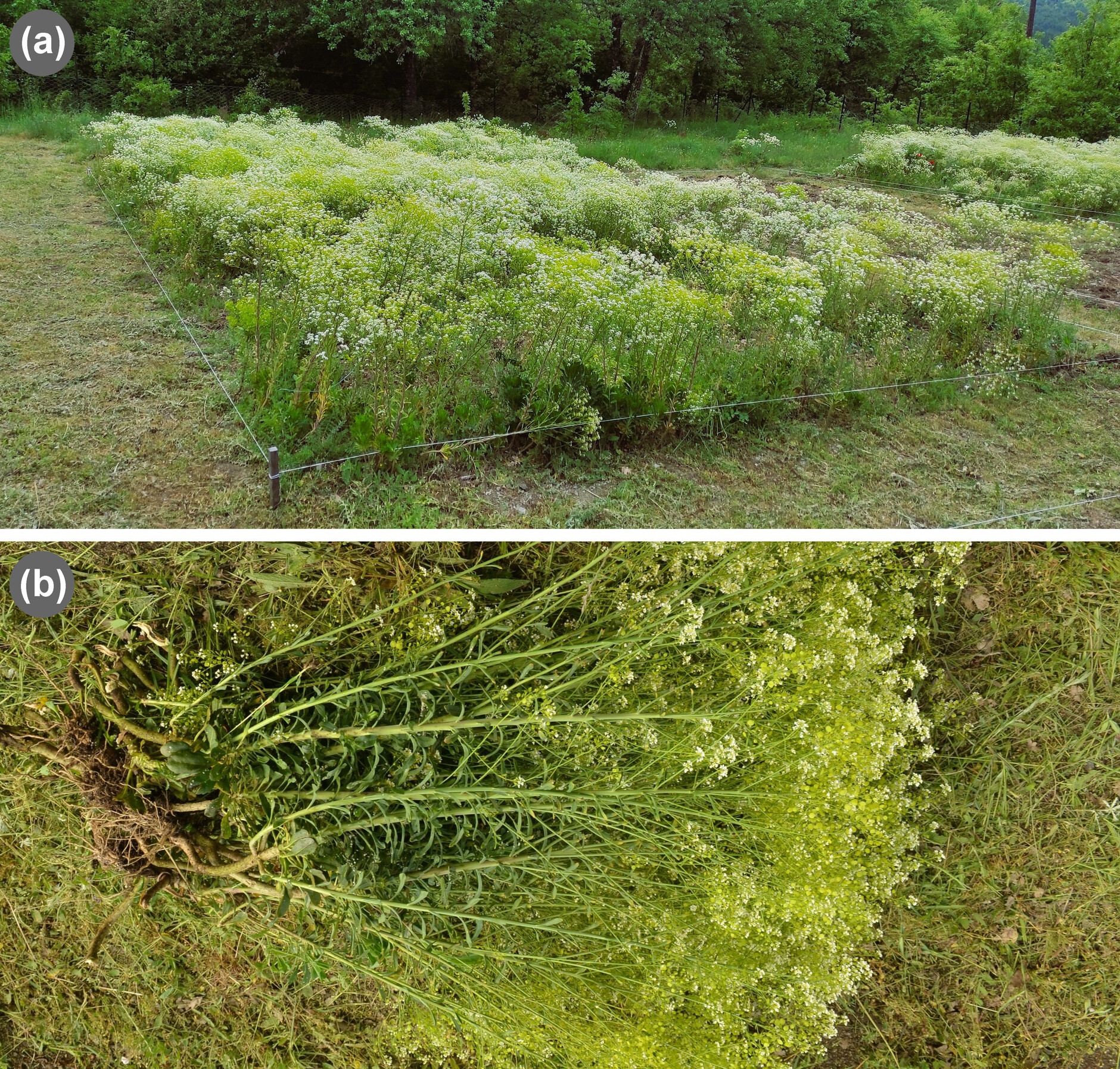
Nickel (Ni) plays a crucial role in the green transition, driven by the climate crisis and the demand for sustainable energy. Ensuring a stable and sustainable supply of Ni is essential for supporting future energy needs and global decarbonization. Nickel agromining aims to develop cultivation systems that efficiently manage Ni-rich soils by integrating agriculture with sustainable resource extraction. The Greek endemic species Bornmuellera emarginata (Brassicaceae), known for its exceptional Ni hyperaccumulation, is a promising candidate for agromining applications. This study evaluated the effect of fertilization type (organic vs. inorganic) on B. emarginata, cultivated in 25 m2 plots over a three-year period (2018–2020), with a focus on Ni yield. Organic fertilization significantly increased biomass production in the second year (9.9 t ha−1) compared with inorganic fertilization (4.4 t ha−1), primarily due to improved soil structure and moisture retention. As a result, Ni yield was higher in organically fertilized plots (58.2 kg ha−1) than in inorganically fertilized plots (41.9 kg ha−1) during the same year. However, this pattern was reversed in the following year (2020). A combined fertilization approach using inorganic and organic fertilizers may be the most effective strategy to maximize both biomass production and Ni yield, thereby enhancing the efficiency of Ni agromining.