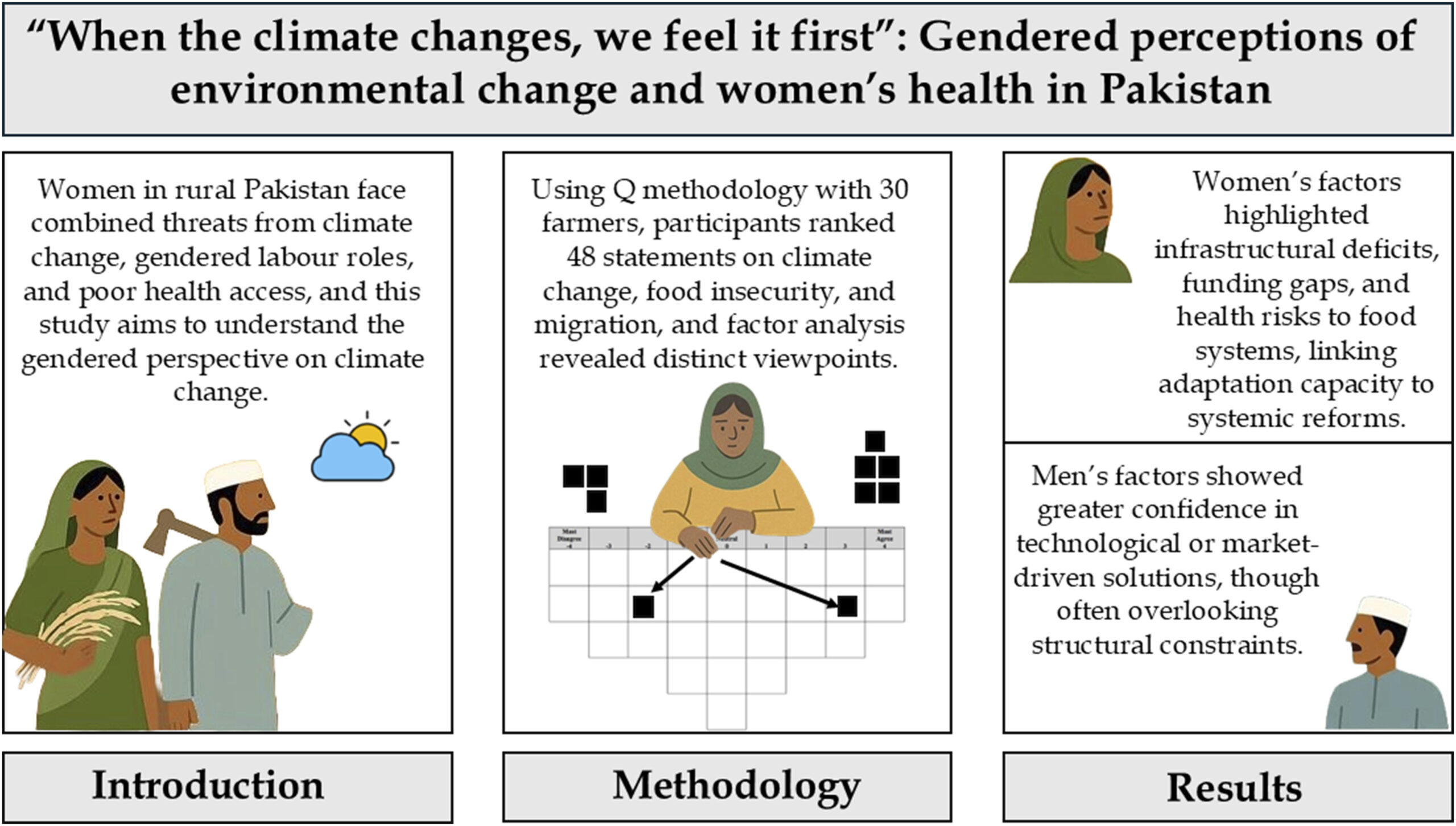
This study looks at how women and men farmers in rural Pakistan understand climate change and what they believe is needed to protect health, especially women farmers’ health. We spoke with smallholder farmers in South Punjab and asked them to rank statements about climate change, its causes, effects, and possible responses, allowing us to see where views overlap and where they differ. Women often described climate change as part of daily life (hotter days, shifting rainfall, sick animals, rising costs, and more pressure on food and care work) and highlighted barriers to adaptation such as poor roads and clinics, slow or missing support, and limited access to timely information, with many linking these problems directly to risks for mothers and children. Men showed a wider mix of views: some placed hope in technology and markets, others felt climate change is in God’s hands or that current impacts are manageable; these perspectives were less likely to focus on the structural barriers raised by women. Faith mattered for both groups, providing strength and meaning for some, but reducing the urgency to act for others. For policy and practice, climate plans should be designed with women, not just for them, and should invest in local health services, nutrition support, early warning systems, and usable information while respecting cultural and faith perspectives and improving access to resources and decision-making. By addressing both daily needs and broader system barriers, communities can build fairer and healthier paths to climate resilience.
We use cookies on our website to give you the most relevant experience by remembering your preferences and repeat visits. By clicking "Accept All”, you consent to the use of all the cookies. Select "Cookies Settings" for more information. Cookie settingsAccept AllReject
Privacy & Cookies Policy
Privacy Overview
This website uses cookies to improve your experience while you navigate through the website. Out of these cookies, the cookies that are categorized as necessary are stored on your browser as they are essential for the working of basic functionalities of the website. We also use third-party cookies that help us analyze and understand how you use this website. These cookies will be stored in your browser only with your consent. You also have the option to opt-out of these cookies. But opting out of some of these cookies may have an effect on your browsing experience.